
Samskruti Talks | Modern Perspective of Pancha Purusha - Relevance of Health and Education
Updated: Jul 29
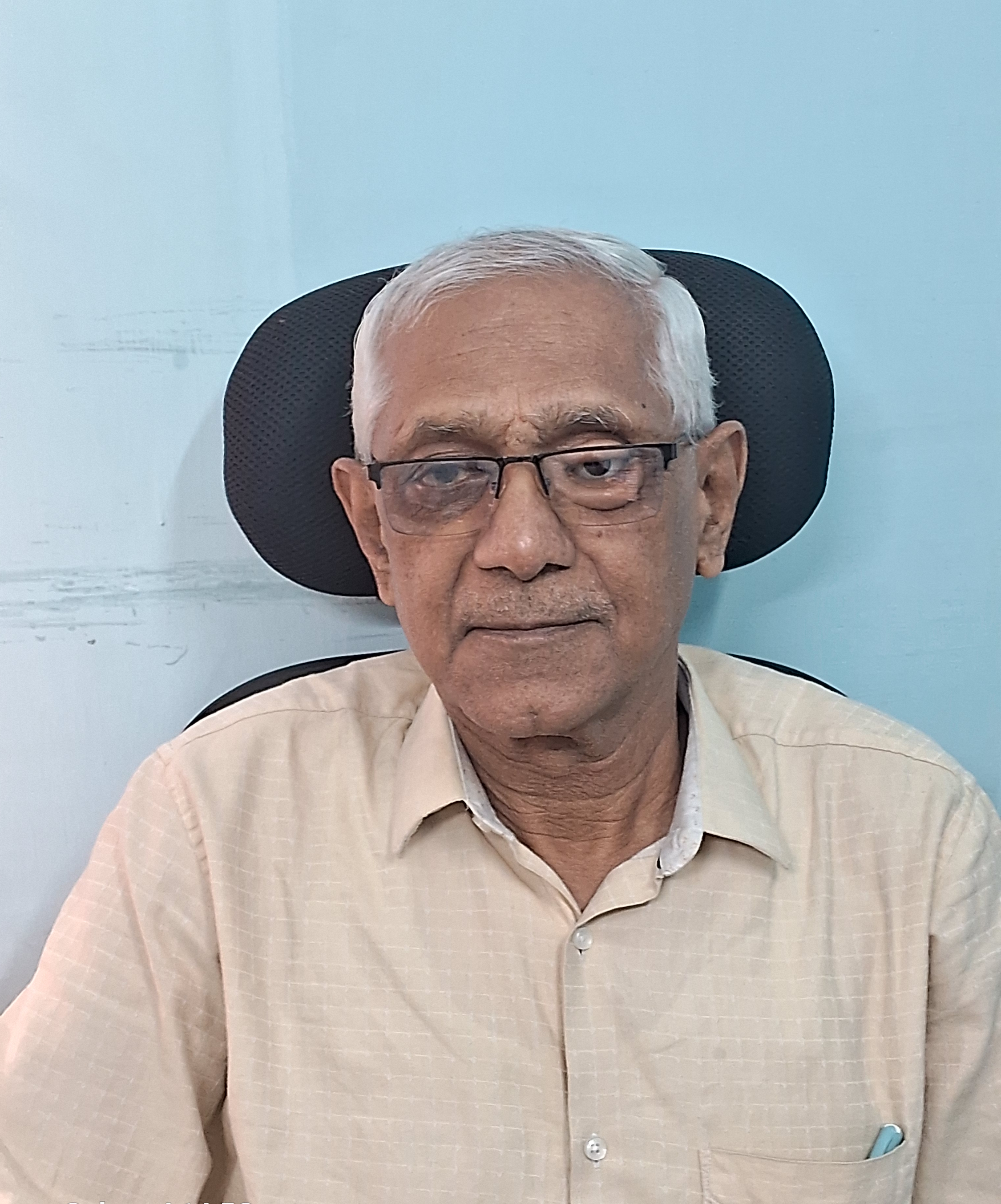
Speaker: Dr. Rajiv Joshi, Professor of Physics, Central University of Karnataka
Overview
This talk presents a rigorous modern reinterpretation of the ancient Bharatiya concept of Pancha Purusha (the Five Structural Identities). Dr. Rajiv Joshi — a physicist by training — bridges classical Indian philosophy with contemporary frameworks from network science, graph theory, and systems biology to offer a unified methodology for understanding reality, health, and education.
1. Motivation: Reclaiming Bharatiya Asmita through Methodology
Pointing that why India, despite a rich philosophical heritage, struggles to articulate its own identity (asmita) in modern term, Dr. Joshi argues the core problem is not a lack of knowledge but a loss of methodology - specifically Bharatiya Yukti (Indian logical methodology). By examining texts such as Charaka Samhita, Tantra Yukti, and Yukti, this methodology can be recovered. Bhasha is one which encode systematic reasoning principles. A shastra must neither be misinterpreted, wrongly interpreted, nor over-interpreted; rigorous yukti guards against all three.
2. Foundational Concepts: Order, Identity, and Structure
2.1. Definition of Order
Presenting a Socratic exploration of the concept of 'order,' Through interaction with the audience, Dr. Joshi established that order is fundamental relation — a mathematical relationship between objects in space (spatial order), orientation (orientational order), or time (temporal order). Referencing physicist David Bohm, he argued that all of reality is built upon such relational scaffolding.
2.2 Definition of Identity (Astitva)
An identity is defined as attribute + the time domain. Without attributes, an object cannot be observed. Without temporal coincidence, two entities cannot interact. Identity is always complex - it requires numbers (many parts) and correlation (connections between parts). A single isolated cell is not a person who has 10²³ connected cells. This equivalence — identity which is complexity, which is equal to connectivity - becomes the philosophical foundation of the presentation.
2.3 Nodes, Connections, and Force
Using a mechanical analogy, Dr. Joshi showed that force itself only exists through bandhana (constraint / connection). The more the constraints, the more the force an object can exert. This leads to the key insight: reality is a consequence of nodes (point identities) and constraints (connections). All structural reality can be mapped as a network of nodes and paths.
3. Purusha, Prakriti, and the Five Koshas
3.1 What is Purusha?
Purusha is defined as the fundamental structural identity - a network of nodes and connections operated by Ahankara (ego / self-referential awareness). Purusha is dynamic, observable (though only implicitly), and cloaked by Prakriti (nature / gunas). This stands in contrast to the static, non-observable Purusha of Sankhya philosophy; the framework here draws from Abhinavagupta's Kashmir Shaivism where Purusha is both real and dynamic.
3.2 The Five Purushas (Pancha Kosha / Pancha Purusha)
Every being simultaneously exists at five levels of structural identity, each corresponding to a 'Purusha' (structural layer). These are graded by complexity - the more complex the network, the higher the layer:
Anna (Food/ Physical) | Physical body | Organs, tissues, Srotas (channels) |
Prana (Life-force) | Vital energy / breath | Marma points (vital junctions) |
Manas (Mind) | Thought / discrimination | Sensory nodes, cognitive paths |
Vijnana (Awareness) | Knowledge / learning | Attention, motivation, cognition |
Ananda (Bliss) | Highest complexity / least ego | Integrated, least-ahankara state |
Every individual possesses all five layers simultaneously, in varying degrees. The Ananda Purusha is the most complex (most connections, most paths) yet has the least Ahankara - it is the most expansive, least ego-bound identity. Crucially, each Purusha can be engaged, treated, or educated independently.
3.3 Kanchukas — The Five Coverings (Abhinavagupta)
Drawing on Abhinavagupta, Dr. Joshi explained that every Purusha is 'covered' (limited) by five Kanchukas (sheaths), which define its scope and finitude:
Kala: Time - limits the Purusha's temporal span
Niyati: Circumstance / space - determines where and under what conditions it exists
Raga: Desire / tendency - makes it want to remain in its current state
Vidya: Knowledge capacity - whether it is knowable and self-aware
Kala (Kalatva): Relational extent - the breadth of its connections to others
As these Kanchukas are gradually removed (through sadhana, jnana, or evolution), the Purusha moves from a limited structural identity toward an expanded, universal one.
4. Application to Health
Dr. Joshi redefined health as an optimised configuration of nodes and paths across the five Purushas. Disease arises when nodes are dysfunctional or paths are blocked (vikriti -deviation from natural state). Diagnosis begins by knowing the Prakriti (natural configuration) of a person, then identifying the Vikriti (the deviation).
4.1 Treatment Mapped to Each Purusha:
Anna Purusha: Treatment through Ahara (diet), Vihara (lifestyle), and Asana (posture) -the physical channels (Srotas).
Prana Purusha: Treat through breath-work and Marma chikitsa (stimulation of vital junctions where prana concentrates).
Manas Purusha: Treat through Gandha (smell / sensory inputs) and other sense-object interactions that reconfigure thought patterns.
Vijnana Purusha: Treat through learning, unlearning- reconfiguring cognitive pathways.
Ananda Purusha: The highest state; treatment at this level involves reducing Ahankara, enabling the most complex, freest integration.
Health thus becomes a complex network chart of these nodes across all five layers, and an optimised chart across all five is the definition of complete well-being.
5. Application to Education
Using the example of a student who is intelligent but fails in class, Dr. Joshi dealt with the diagnostic framework applied to education. The student's vikriti (failure) is traced through the network:
Is the thinking node (Manas) intact? Yes — he is a good thinker.
Are the paths functioning? Check attention, motivation, and cognition individually.
If thinking is fine but paths fail The problem is in the path between thought and output — perhaps motivation or attention is blocked.
If attention, motivation, cognition all pass The failure lies in the knowledge-assembly path (Vijnana Purusha).
Education, in the Pancha Purusha framework, is the process of building richer, better-connected networks at the Vijnana level. Learning is the creation of new nodes and paths; unlearning is the removal of false or redundant connections. True education operates at the level of awareness, not mere information transfer.
The speaker noted: learning to navigate networks - social, informational, professional - is itself a form of education in this framework.
6. Pancha Purusha and Modern Network / Graph Theory
Dr. Joshi explicitly maps Pancha Purusha onto the language of modern network science. Each Purusha is a sub-graph within the larger network of a person. The five layers are five classes of nodes and edges with different properties:
Anna Purusha : physical network (organs, tissue channels)
Prana Purusha : energy / flow network (breath, Marma as high-centrality nodes)
Manas Purusha: cognitive-discriminative network
Vijnana Purusha: awareness / knowledge graph
Ananda Purusha: the most densely connected, least ego-localised graph
Vikriti is a graph perturbation - a failed node or blocked edge. Chikitsa (treatment) is graph repair. The Purusha's evolution (from pratriti to jalawat, agnat etc.) is an increase in network complexity and connectivity. Abhinavagupta's Kanchukas function as constraints on the graph - limiting its reach and self-awareness.
7. The Aim of Life: Becoming a Better Configuration
In the concluding section, Dr. Joshi raises the philosophical question posed by Garuda to Vishnu: What is the aim of life? The answer, drawn from Garuda Purana, is: to become a better configuration. In the Pancha Purusha framework this means:
Becoming Uttama Purusha — the highest, most complex, least-ahankara structural identity.
The best configuration is Anandamaya — maximum complexity, minimum ego-localisation.
The path to this is through Jnana and Dhyana — learning, unlearning, and deepening awareness.
To become a Vigyan (person of vijnana) in the truest sense: not a mere scientist, but one who becomes Anandavat or Akashavat Purusha.
The marga (path): Vidya — true education that expands awareness.
The final takeaway from Garuda Purana as interpreted by Dr.Joshi: the aim of life is Vidya-marga becoming more and more educated in the deepest sense, not merely accumulating information but expanding the complexity and integration of one's entire Pancha Purusha network.
8. Key Takeaways
Pancha Purusha is a comprehensive design methodology, not merely a philosophical concept - it provides a structured way to model any system.
Reality = nodes + connections + Ahankara (operating force), enveloped by Prakriti (gunas).
Every individual simultaneously exists as five layered structural identities (Anna, Prana, Manas, Vijnana, Ananda).
Health is an optimized configuration of these five networks; disease is a Vikriti (deviation) identifiable through network diagnosis.
Education is the construction of richer, better-integrated networks at the Vijnana level.
Kanchukas (five coverings of Abhinavagupta) explain why Purushas are limited -and their removal explains spiritual evolution.
The aim of life as per Garuda Purana: become a better configuration -Uttama Purusha - through Vidya.
Bharatiya Yukti (Indian logical methodology) provides a rigorous, internally consistent framework that can stand alongside and enrich modern science.


Comments