
Samskruti Talks | Insight into Chanakya’s Neeti Shastra
Updated: Jul 29
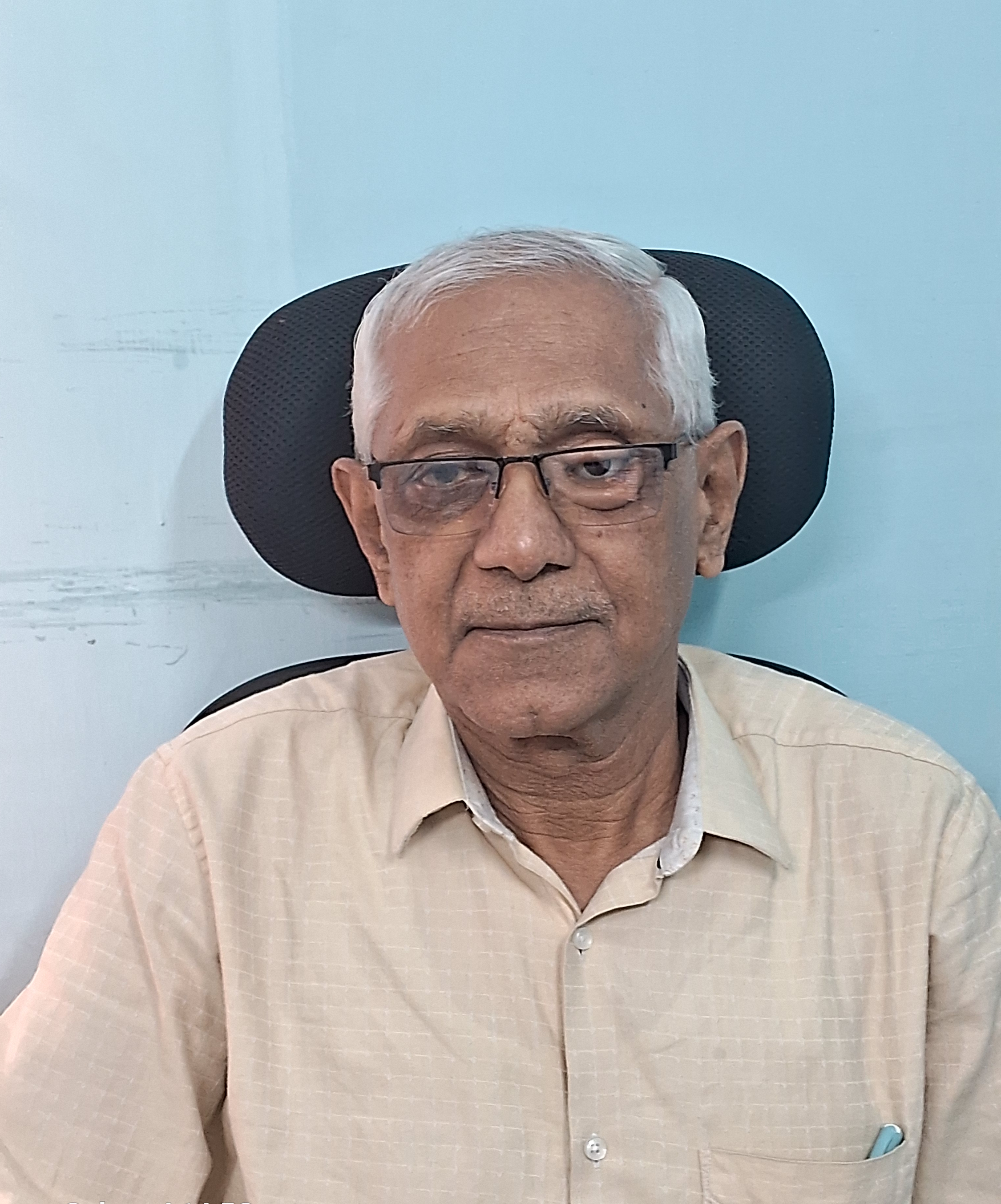
Speaker : Dr. Radhakrishna Pillai, Educationist, Trainer and Expert on Chanakya
Dr. Radhakrishnan Pillai, an eminent scholar and an expert on ‘Chanakya’ visited Samskruti Foundation and addressed a gathering of invitees numbering around 85. The report on the gist of the address is given below. The talk was titled as ‘Insights into Chanakya’s Neeti Shastra’.
Summary :
Dr. Radhakrishnan Pillai said that he had written 22 books on Chanakya with the aim of acquainting the next generation to Chanakya. He said he studied Chanakya in the ‘Gurukul’ format. His guru said studying Chanakta was like studying oneself as every person has a Chanakya embodied in him/her. Chanakya is so important that one whole generation can be destroyed by not studying / not applying Cahnakya! It takes only a week to study Chanakya but a lifetime to understand him.
Dissecting the word ‘insight’, he went through words like sight(vision), foresight, hindsight, inner sight and future vision. While sight is physical, insight and foresight are deeper things that a leader should possess. He recalled an instance a decade ago when the CEO of a giant oil company showed him a huge ‘site’ for a future Training Centre and urged him to visualize a great training centre ten years thence. Great leaders don’t just believe that ‘it will happen’. They know that it will happen! We are inspired by Swami Vivekananda who was such a leader. We do ourselves a favour when we read Swami Vivekananda! The purity of Vivekananda’s vision revealed to him that India’s time will come soon and it will shine.
Coming to the term ‘Neeti Shastra’ Dr. Radhakrishna said- ‘Neeti’ means all of strategy, plan, policy etc., also including roll back. ‘Shastra’ means scriptures. Next, Dr. Pillai covered the theme in three parts namely,
Leadership,
Social Life, and
Governance
1. Leadership :
To be a good leader, a leader needs to create the image of a leader. According to Cahnakya, a Leader is like the Centre of concentric circles, a ‘Mandala’ or a ‘Yoniti’. A leader is imagined in the centre of the circle and the circle moves with the leader. A leader is activity oriented, righteous man or a ‘Raja-Rishi’ – the same as envisioned by Pluto to be the ‘Philosopher King’. A ‘Raja-Rishi’ appears to live in the present, but actually is busy creating the future! He is not the kind to indulge in Power play.
He quoted a Samskrit couplet “ Prajananaam sukham Raja sukham, ... Hitam”. (A Raja is one who looks after the welfare, not necessarily the enjoyment or small comforts of the subjects.) Popularity is not a criterion for good leadership. He also writes and creates contents. ‘Kutopanishath’ also mentions these two aspects ‘Sukha’ and ‘Hitha’ with the later being important.
As stated in the ‘Mash Mellow theory’, Leadership is a long time game, demanding patience and does not look for instant comforts or appeasement etc. In ‘Shantiparva’ of Mahabharata, Bhishma trains Yudishthira on leadership. What Bhishma taught therein was also followed by Chanakya.
- A king should be focussed on the subjects and not on the throne.
- If the top leader (No.1), is not connected to the masses, No. two will become No. one!
- The daily routine of the leader (King) includes 1½ hours interaction with people at the bottom level. (Dr. Radhakrishna narrated an anecdote from UK highlighting the importance of the Royalty allotting some time for the common people). This is also in tune with the modern principle that ‘Customer is the boss!’
1. Social Life – Parenting:
Mannerisms, customs and traditions have their crucial place in Society and for grooming of its people.
- For the first five years, a child need to be showered with love and affection
- For next ten years (5-15), the child needs to be taught discipline
- Post fifteen years of age, a son should to be treated like a friend.
The second phase (5-15 years) is often neglected in modern times with negative effects being commonly seen. Chanakya says that it is important to discipline the child. The first social unit is the Family. A genius is one who knows what to do and also what not to do! Khaleel Gibran, a famous Arab poet and Philosopher says that every generation should get better than the previous. We must also examine if we are training our next generation to play their important part in the global role they may have to assume. (Anaecdote- One is considered a grown-up when one matures and not that one matures when one grows up).
1. Governance :
Governance is very important. There are seven attributes to a State associated with its governance (called Saptanga in Samakrit). They are :
- Swami (King), Amatya (Minister/s), Janapada (People), Durga (Fort), Kosha (Finance), Danda (Force /Security), and, Mitra (Friend)
- Taking the example of a school as an institution, the seven equivalents are identified as- the Head(Principal), The Staff (Minister), Students (People), School Building (Fort), Fee(Finance), Support Staff (Force) and Parents(Friends)
A school is not complete without even one of the seven parts.
- Chanakya was famous during his time in India and even in other nations because of the good governance he contributed to ensure. He narrated the anecdote of some Greek tourists who find that in the Indian Kingdom all are happy and everyone names a higher entity for their happiness, ultimately leading to Chanakya. But Chanakya tells them that the nation is happy because the state is run by DHARMA!
Dr. Radhakrishna Pillai concluded his talk by stressing that we all have been naturally instrumented or designed to serve people. While the principles propounded by Chanakya are natural, his genius lied in employing the natural principle effectively for life.
Q/A Session :
How does the value system carry forward?
In the first chapter on instructions for kings, Chanakya says, ‘it is the discretionary skill and humility, not oratory skills, that influence people’ as opposed to what is in vogue for some- Talk aloud, talk more and talk lies. The behaviour of the leader is observed by people. It does not take long to descend from a ’Hero to a zero’. ‘Vriddha Samyoga’ that is seeking counsel from the elderly people is very important as it assures humility. Value not just a statement but what one practically lives. ‘Seva’ is not equivalent to service. Seva is also an attitude.
Value creation is a value. Detachment is also a value.
What about open door policy and easy accessibility of the ruler?
In addition to the ‘Saptak’ in Chanakya Neeti, advice from other sources (e.g. Board
of Governors, unseen mentors etc.) are equivalent to Chanakya. Chanakya also created ‘Leadership Audit’.
Importance of Spiritual awareness / Social awareness/ The Japanese model?
Without spirituality one is not a leader. Japanese culture of training is traced to Chanakya. Asoka is very popular in Japan. They follow Indian ethos. ‘Kaizen’ comes from spiritual content of India. We currently suffer from the lack of dignity of labour. In Japan, school children are taught discipline. They even clean their toilets. Even Germany is a highly disciplined country. Dharma stems from Praja-Dharma / Raja-Dharma. Besides, in India we have an age problem associated with leadership. Experience is good but not essential. A younger leader is better as he can rule for a long time and take long term decisions.


Comments