
Samskruti Talks | Kaumara Bhritya : Pediatrics and Child Care in Ancient India
Updated: Jul 29
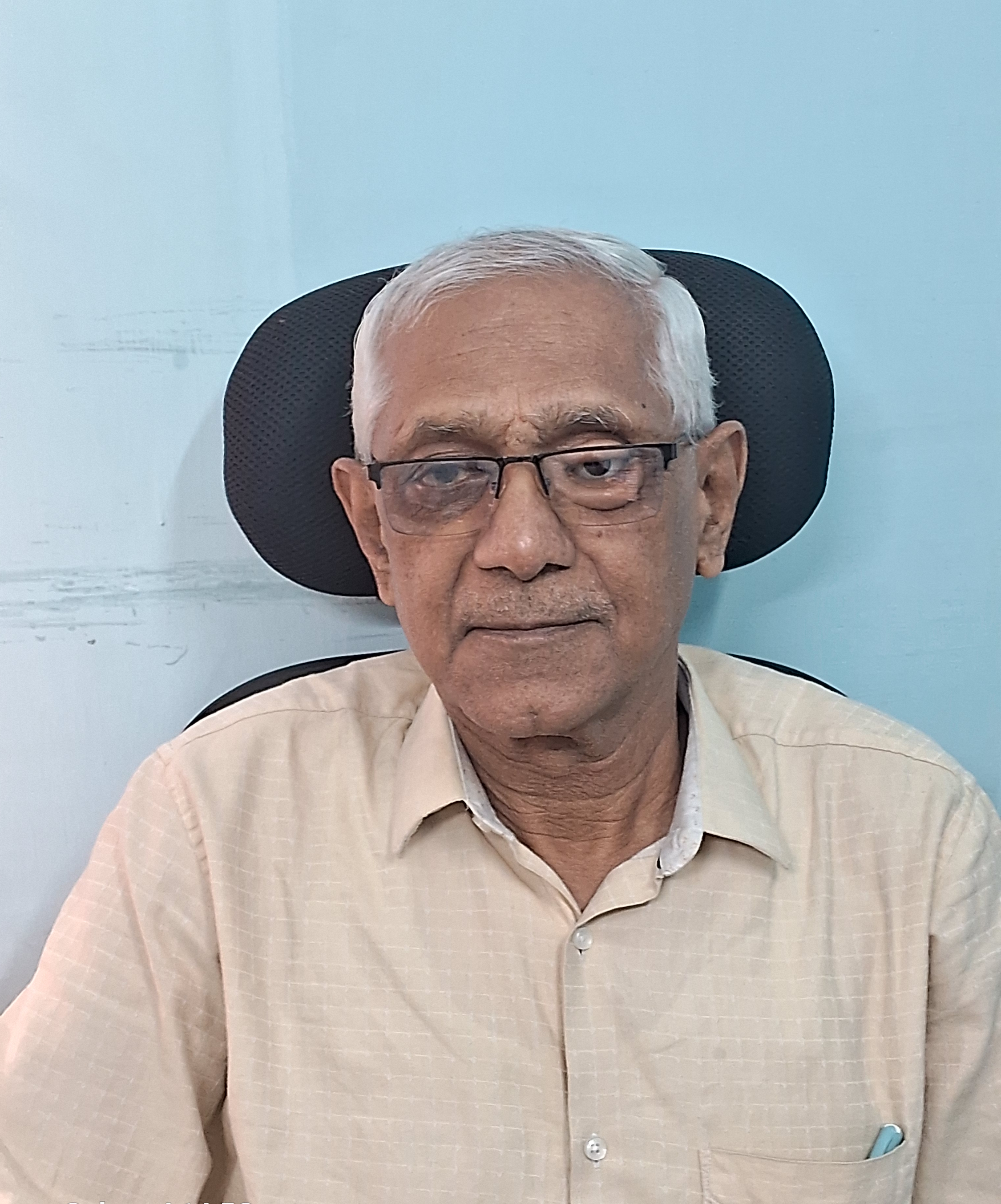
Speaker: Major General (Dr.) M.N. Gopinathan Nair, MD, Paediatrician
In this talk, the featured speaker was Major General Dr. M.N. Gopinathan Nair, a senior pediatrician with over five decades of experience in military and civilian medicine, who spoke on Kaumarabhritya - the traditional Ayurvedic system of paediatrics and child care. The session also included an introduction by a Samnskruti Foundation representative, an extended audience Q&A.
Dr. Gopinathan Nair opened with a personal story – how his wife's recovery from a serious chronic illness through Ayurvedic treatment in 1985, after modern medicine had not helped, sparked his enduring faith in Ayurveda. He then made the case that ancient Indian texts formulated many concepts later “rediscovered” by modern science — citing examples on gravity (Brahmagupta, Bhaskaracharya and Aryabhata, centuries before Newton and Copernicus), the theory of evolution (which he linked to Patanjali's writings, predating Darwin), chromosome counts and embryonic development referenced in the Mahabharata, cell division references predating Robert Hooke, and phototherapy for jaundice (“Kamala”) as described in the Rigveda and Atharvaveda, centuries before its “discovery” in the 1950s. He also discussed ancient classifications of cancer in the Sushruta Samhita.
He then explained the foundations of Ayurveda — the five elements (Vayu/air, Agni/fire, Jala/water, Akasha/ether, Prithvi/earth), and the three Doshas (Vata, Pitta, Kapha) as biological energies governing the nervous system, metabolism/nutrition, and bodily structure respectively, whose balance determines health. He traced the textual history of Ayurveda (Atharvaveda, Sushruta Samhita, Charaka Samhita and Kashyapa Samhita) and explained that the field of “Kaumarabhritya” (child care) covers pre-conception preparation through childhood, paralleling but predating modern paediatric staging (antenatal period, infancy, neonatal period, under-five care, school age).
He gave several examples mapping common childhood illness presentations (e.g., high fever/CNS involvement, pneumonia, shock, rheumatological illness, hepatitis) onto the Dosha framework, arguing the underlying logic parallels modern diagnostic reasoning by organ system. He also discussed newborn care practices recommended in ancient texts — cleaning and warming the newborn, clearing the airway before stimulating breathing, gentle physical stimulation — and connected ancient sunlight-exposure treatment for jaundice to the same underlying mechanism used in modern phototherapy. He discussed classifications of congenital conditions and their predisposing factors as described by Sage Kashyapa.
The talk continued with a section on diet and nutrition: critiquing the modern high-protein diet trend, advocating for balanced, home-cooked, affordable meals, and criticizing reliance on processed infant/health-food products (using a well-known cereal-based drink mix as an example, arguing that home-made equivalents using rice or wheat semolina (sooji) are more economical and comparable nutritionally). He then presented a series of illustrative “food resembles organ” examples (carrot/eye, tomato/heart, garlic and onion/cells, celery/brain, drumstick/bone, grapes/blood, avocado and womb) as a memorable, faith-based framing for nutrition advice rather than as strict science.
Next, there was an extended audience Q&A covering: the lack of modern clinical-trial-style data supporting many Ayurvedic practices (with the speaker arguing inadequate or deficient record-keeping, not efficacy, is the gap, citing skin-to-skin contact “Kangaroo Mother Care” as an example of a traditional-seeming practice later validated by data); despite the loss of much ancient Indian scientific and technical knowledge over roughly a millennium of foreign rule, Ayurveda is said to have survived; criticism of poor research training among Indian medical postgraduates; the commercial/market dynamics that favour research funding for generic pharmaceuticals over personalized Ayurvedic treatment; and a recommendation that public policy support should focus on creating public awareness and a “concerted effort” across systems of medicine, rather than legislation alone. The session closed with brief questions on traditional restrictions on pregnant women during religious ceremonies, which the speaker said he could not speak about it with confidence.
Key Themes across the Session
Ancient Indian texts (Vedas, Mahabharata, Sushruta/Charaka/Kashyapa Samhitas) are presented as works holding knowledge on numerous concepts later “rediscovered” by modern science and medicine.
Kaumarabhritya, the Ayurvedic system of child care, is presented as paralleling modern paediatric staging and diagnostic logic, organized around the Vata-Pitta-Kapha framework.
A recurring argument: the gap between Ayurveda and “evidence-based” modern medicine is mainly one of data and record-keeping, not necessarily efficacy.
Practical takeaways from Kaumara Bhruthya offered: balanced, home-cooked diets over fad/processed nutrition; basic newborn care principles;
A call for greater integration and awareness across systems of medicine, supported by public policy.


Comments